The IT Director’s Mandate: Aligning Every Dollar of IT Spend with Revenue Goals
For years, IT has battled a persistent reputation: a necessary cost center, expensive but unavoidable.
But the post-2020 digital era has rewritten expectations. Business leaders no longer want IT to “keep the lights on”—they expect technology to drive revenue, accelerate innovation, and directly impact competitive advantage.
As a result, IT Directors are experiencing the sharpest role evolution in two decades. You’re no longer managing systems—you’re managing business outcomes.
This shift has created a new mandate:
Every dollar spent in IT must be traceable to a measurable revenue impact.
Below, we break down how modern IT leaders accomplish this alignment without increasing budgets—and how you can transform your department into a true revenue engine.
I. Why the IT Director’s Role Has Changed: From Operational Necessity to Growth Catalyst
CIOs, CFOs, and Boards want IT to be at the center of growth strategy—not a support function.
Three major forces are driving this change:
1. Technology is now the business
Digital experience = customer experience.
Every outage, delay, or security gap directly affects customer revenue, retention, and satisfaction.
2. Competitive advantage is increasingly digital
From AI to automation, from cloud-native platforms to data-driven decision-making, technology defines market winners.
3. CEOs want ROI, not activity
Operational metrics like uptime, ticket volumes, or patch cadence no longer satisfy the C-suite.
They want measurable business value.
IT Directors who bridge the gap between technology outcomes and business outcomes become strategic power players inside their organizations.
II. The Problem: Most IT Budgets Aren’t Designed for Revenue Alignment
Despite evolving expectations, many IT budgets are still built using outdated models, creating a direct disconnect between spend and strategy.
1. Too Much Money Goes to Maintenance
Most enterprises still allocate:
- 60–80% of IT spend to “keep the lights on” functions
Only 20–40% to innovation or modernization - That imbalance chokes transformation efforts long before they begin.
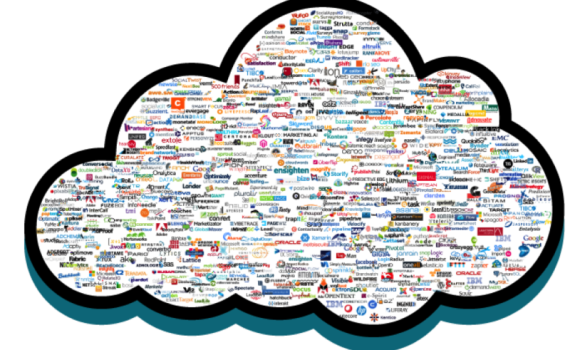
2. Tool Sprawl Buries Money in Redundancy
Security tools, monitoring tools, productivity tools, endpoint tools, shadow IT—it adds up fast.
A typical midmarket or enterprise organization wastes 20–30% of tool spend due to overlap, underuse, or unnecessary duplication.
3. Highly Paid Engineers Are Doing Low-Value Work
Top technical talent often spends:
- 30–40% of their time on repetitive tasks
- 10–15 hours/week reacting to issues
- Significant time patching, monitoring, troubleshooting
This is value leakage on a massive scale.
4. Traditional KPIs Don’t Connect to Revenue
- Uptime alone does not tell a CFO how IT impacts revenue.
- Time-to-close a ticket doesn’t speak to EBITDA.
- Patch cadence doesn’t resonate at the board level.
The business wants a direct line of sight from technology → revenue, and most IT reporting simply isn’t built that way.
III. The Solution: Build a Business-First IT Budgeting Framework
World-class IT Directors use a model that segments spend according to revenue alignment.
There are three revenue-linked categories of IT investment:
1. Revenue Protection
These initiatives reduce risk, prevent loss, and maintain customer trust:
- Cybersecurity maturity
- Business continuity & resilience
- Infrastructure uptime
- Identity & access management
- Compliance readiness
Every avoided outage or breach protects revenue.
2. Revenue Acceleration
These are investments that improve speed, capability, or productivity:
- Automation and workflow orchestration
- Scalable cloud architecture
- Modern collaboration tools
- Application performance improvements
- Data intelligence platforms
These reduce operational drag, shorten cycle times, and support growth teams directly.
3. Revenue Creation
These initiatives produce new value or open new markets:
- Digital self-service platforms
- AI-driven customer tools
- Advanced analytics for product innovation
- Customer mobile or web app modernization
- Cloud-native digital product development
This is where IT becomes a competitive advantage and a revenue generator.
IV. The IT Director’s Step-by-Step Playbook for Aligning Spend to Revenue
The following framework is used by high-performing IT leaders who successfully link every dollar to business outcomes.
STEP 1: Conduct a Spend & Resource Audit
Break all IT budget line items into:
- Run (operational)
- Optimize (efficiency gains)
- Transform (strategic growth)
Uncover:
- Redundant tools
- Underutilized software
- Inefficient labor allocation
- Unnecessary CapEx cycles
This audit usually reveals 10–25% of budget that can be repurposed.
STEP 2: Reclassify IT Spend by Business Outcome
Shift from a technical justification model → business justification model.
For each line item, ask:
- Does this protect revenue?
- Does this accelerate revenue?
- Does this create revenue?
If the answer is “none of the above,” the spend requires reevaluation.
STEP 3: Implement a Revenue Alignment Scoring Model
Rank potential initiatives using weighted criteria:
- Revenue proximity (direct/indirect)
- Risk reduction value
- Time-to-value
- Cost avoidance impact
- Productivity lift
- Strategic importance
This model reveals which initiatives should be prioritized—and which should be eliminated.
STEP 4: Build Executive Reporting That Speaks CFO/CEO Language
Stop reporting:
- Ticket volumes
- Server uptime
- Patching cadence
Start reporting:
- Revenue protected
- Revenue risk avoided
- Operational cost reduction
- Process cycle time reduction
- Customer experience improvement
- Time-to-market acceleration
These are business outcomes that drive C-suite alignment.
STEP 5: Reallocate Budget from Maintenance → Innovation
You accomplish this by:
- Automating repetitive tasks
- Consolidating tools
- Offloading non-differentiating operations to Managed Services
- Eliminating CapEx cycles with cloud strategies
- Improving ITSM maturity
This is how organizations shift from:
70% maintenance → 50% maintenance or less
and reinvest the difference directly into transformation.
V. How Modern IT Operating Models Enable Revenue Alignment
High-performing IT Directors adopt models that unlock time, budget, and strategic capacity.
1. Managed Services
Not outsourcing—strategic capacity enablement:
- Take over patching, monitoring, endpoint management, backup ops
- Provide 24/7 capabilities without 24/7 staffing
- Consolidate tools into one integrated ecosystem
- Reduce risk and operational drag
This frees your internal team and budget for revenue-linked projects.
2. Cloud & Automation
Cloud modernization and workflow automation unlock:
- Faster cycle times
- Reduced downtime
- Scalable revenue-generating platforms
- Lower maintenance burden
This directly accelerates revenue-producing operations.
3. Modern Staffing Models
Shift internal teams to:
- Architecture
- Governance
- Data strategy
- AI adoption
- Application modernization
And shift maintenance to managed services or automation.
This turns your team into change agents—not firefighters.
VI. Revenue-Centric KPIs Every IT Director Should Report
To secure budget and executive alignment, track KPIs tied directly to financial impact:
Revenue Protection KPIs
- Cost of downtime avoided
- Cybersecurity risk reduction value
- SLA adherence → churn prevention
- BCDR recovery time improvements
Revenue Acceleration KPIs
- Automation ROI
- Productivity-per-employee lift
- Reduction in operational cycle time
- Cloud scalability impact on GTM teams
Revenue Creation KPIs
- Digital product revenue
- Customer adoption metrics
- Time-to-market improvement
- Conversion improvements from digital experience
These metrics help the CFO see IT as a value engine.
VII. Conclusion: IT Directors Who Align Spend to Revenue Become Strategic Leaders
Today’s IT Director is no longer a systems manager—they are a growth strategist.
The organizations leading their industries today share one thing in common:
Their IT investments are tightly integrated with revenue strategy.
By shifting from:
- Technical justification → business justification
- Operational metrics → financial metrics
- Maintenance-heavy budgets → innovation-focused budgets
…IT Directors gain executive influence, secure more strategic funding, and accelerate enterprise transformation.
This is the new mandate—
and the IT leaders who embrace it will shape the next decade of business innovation.